Wakely, an HMA Company, partnered with
Lightbeam to deliver actuarial insight and
financial forecasting that helps ACOs
optimize network composition, manage
risk, and maximize VBC performance.
Why ACO Optimization Requires Actuarial Precision
As ACOs take on increasing downside risk under MSSP and REACH, performance outcomes are driven not only by care delivery, but by network composition, attribution strategy, and financial assumptions. Without actuarial-grade analysis, organizations risk missed savings, downside exposure, and poor strategic decisions.
Common challenges:
Limited visibility into true network performance drivers
Difficulty benchmarking providers against regional and national peers
Inability to forecast financial impact of network changes
High-risk decisions made without defensible assumptions
Growing pressure to justify ROI across provider groups
How Wakely Helps Organizations Succeed In Value-Based Care?
Our outcomes-driven advisory services are grounded in real-world population health experience. Every advisory engagement is tailored to your organization’s attributed populations, contracts, and operational realities, ensuring insights translate into execution.
Retrospective Intel
Analyze historical ACO performance across utilization, cost, risk adjustment, and quality.
Benchmark provider groups against regional and national standards.
Identify underperforming TINs, CCNs, and NPIs impacting shared savings.
Foward-Looking
Evaluate future performance scenarios before making network or contract decisions.
Quantify downside risk and upside opportunity across attribution and track options.
Make data-driven decisions with actuarially credible projections.
Core Wakely-Powered Solutions
Lightbeam and Wakely combine AI-enabled population health infrastructure with deep actuarial expertise to deliver unmatched ACO optimization. Together, they provide the tools, insights, and financial justification needed to confidently manage risk, optimize networks, and maximize value-based care performance.
ACO Optimization Retrosight (AOR)
Lightbeam’s ACO Optimization Retrosight solution powered by Wakely enables ACOs to assess historical performance and uncover actionable opportunities to improve utilization, cost, risk adjustment, and quality—benchmarked against regional and national peers.
Key Capabilities
Performance benchmarking at the ACO, TIN, CCN, and NPI level
Identification of network performance gaps with $MM impact
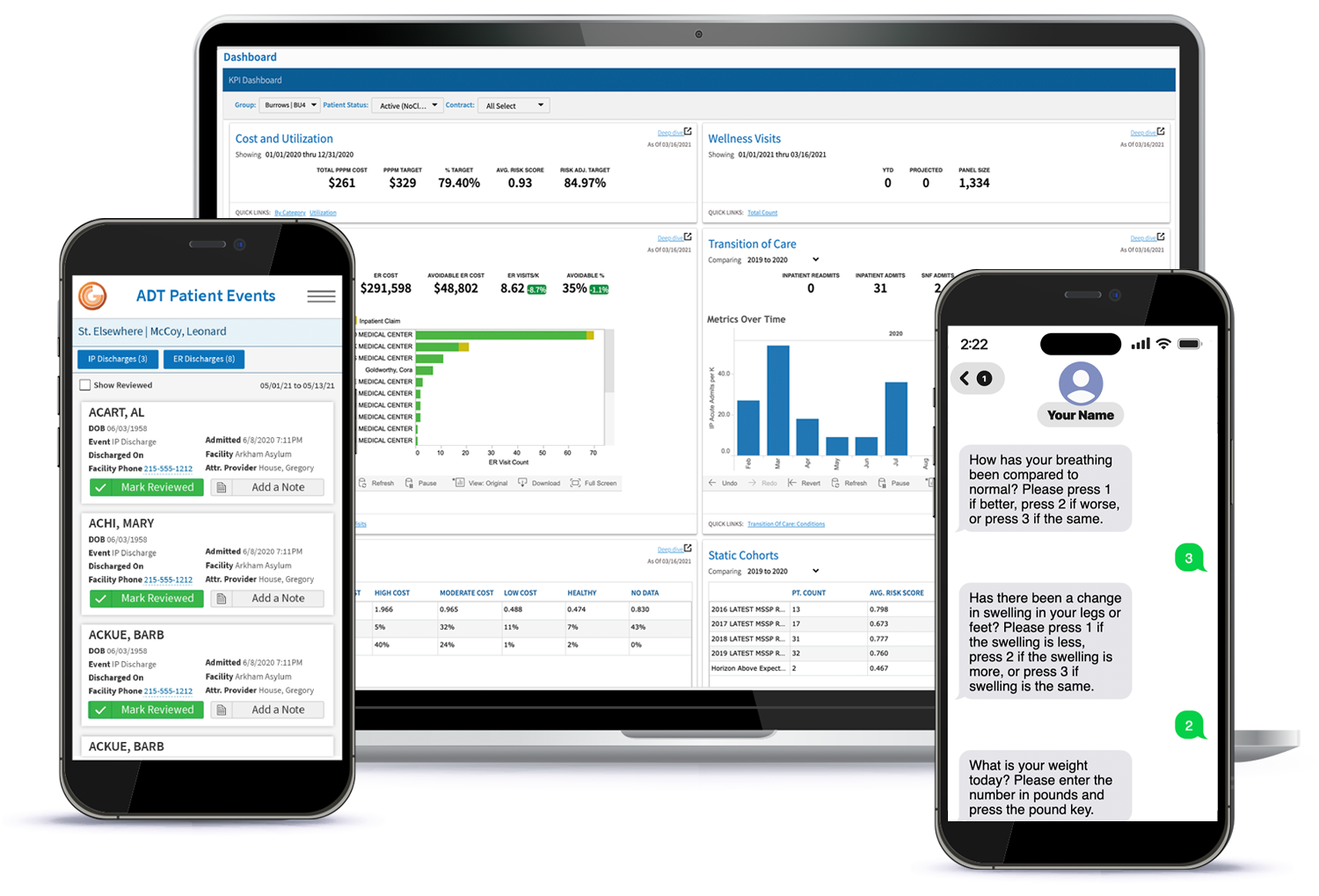
Actionable insights delivered through Lightbeam dashboards and scorecards
Customer Benefits
Proactively identify underperforming providers across the network
Prioritize interventions with measurable financial impact
Build a defensible case for network optimization decisions
ACO Optimization FutureSight (AOF)
ACO Optimization FutureSight extends retrospective insight with actuarial forecasting to evaluate future network and contract scenarios. Wakely actuaries generate projections to help ACOs model risk, attribution strategies, and financial outcomes before decisions are made.
Key Capabilities
Financial projections for MSSP and REACH performance years
Scenario modeling for network composition and attribution changes
Adjustable assumptions for trends, risk scores, and savings/loss rates
Customer Benefits
Forecast earnings and downside exposure with confidence
Compare strategic options before committing to change
Create a clear roadmap for competitive ACO performance
From Insight to Strategic Action
Helps ACOs move beyond static analysis, turning insight into action through a clear, repeatable decision framework.
Predictive Understanding
Identify historical and future performance drivers across networks using actuarial-grade analytics.
Prescriptive Guidance
Understand which network changes, attribution strategies, and interventions will drive the greatest impact.
Proactive Execution
Make informed decisions that reduce risk, improve savings, and strengthen ACO competitiveness.
Client Success
Real-World Impact with Wakely
Across a range of ACO structures, Wakely has helped organizations uncover hidden risk, optimize networks, and unlock millions in incremental value.
A national ACO convener avoided losses and generated tens of millions in incremental value by identifying and removing underperforming health system entities.
An ACO with multiple specialty TINs added $5M in incremental savings by optimizing network composition.
A PCP-led organization selected the most advantageous ACO model, driving $3M in incremental savings compared to a stand-alone option.